

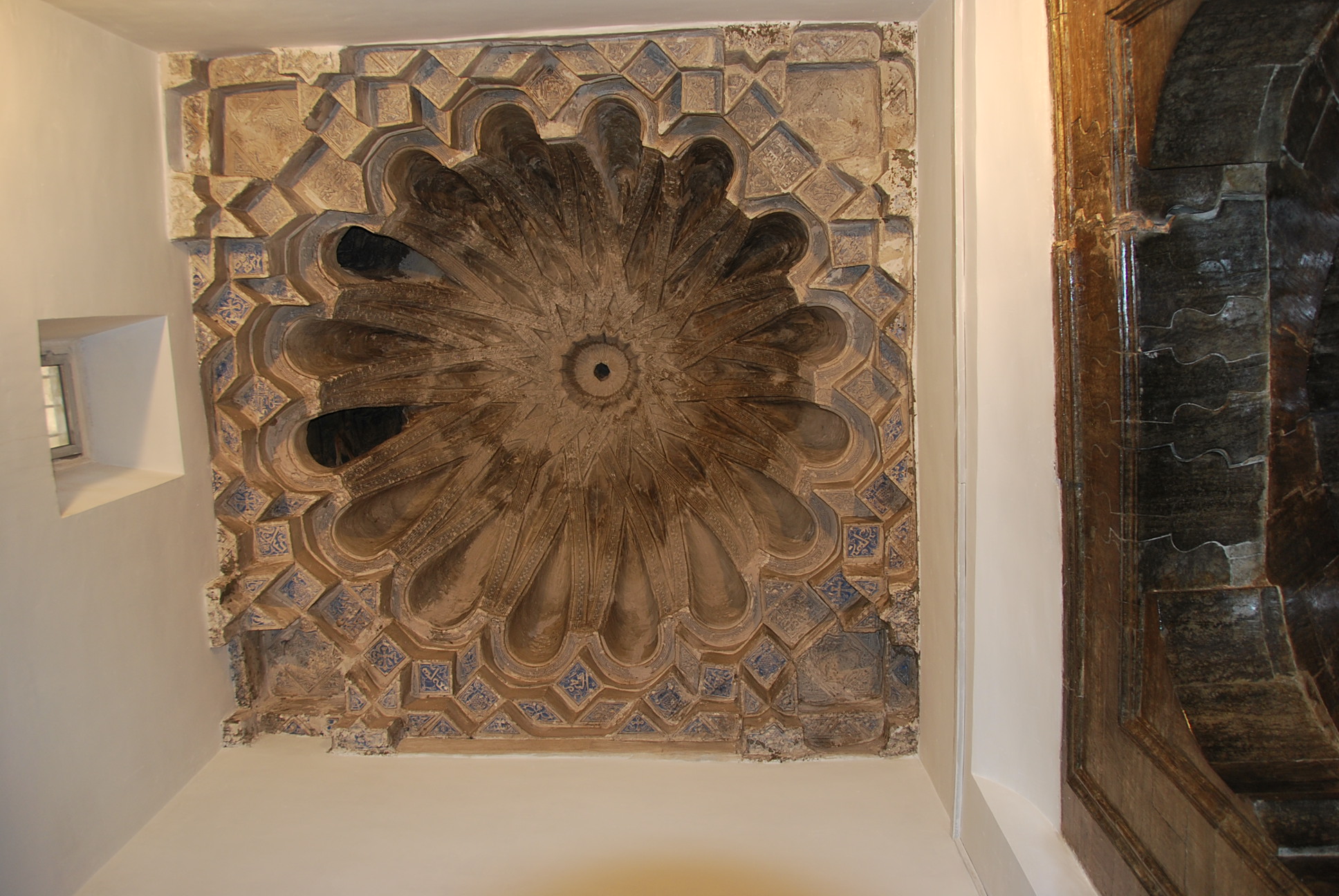
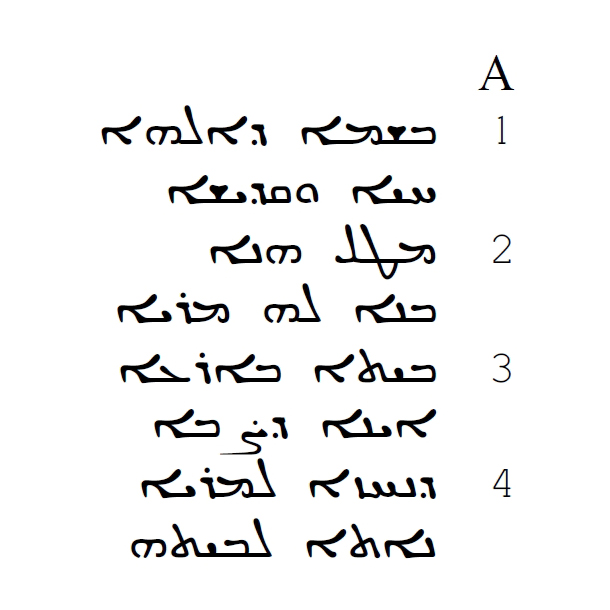
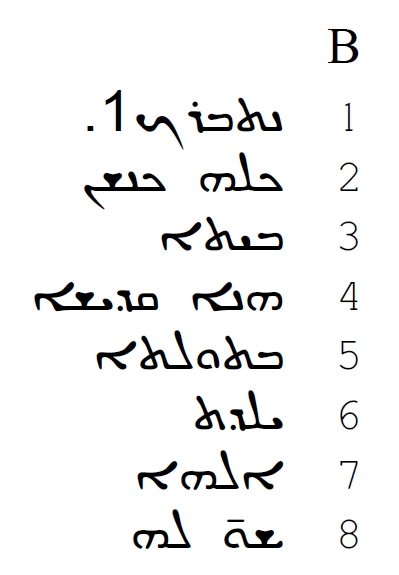
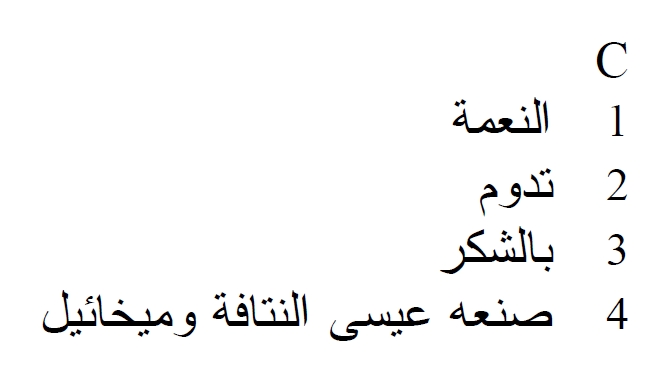
ܒܫܡܐin the namenounroot ܫܡ ܕܐܠܗܐof Godnounroot ܐܠܗ
ܚܝܐlifenounalso the livingroot ܚܝܐ ܘܩܕܝܫܐand holyadjectiveroot ܩܕܫ
ܡܛܠbecauseconjunctionalso on account ofroot ܡܛܠ ܗܢܐthis (m.)demonstrativeroot ܗܢܐ
ܒܢܐbuiltverbroot ܒܢܐ ܠܗhimpronoun ܡܪܝܐthe Lordnounalso Lordroot ܡܪ
ܒܝܬܐthe housenounroot ܒܝܬ ܒܐܪܥܐon earthnounroot ܐܪܥ
ܐܝܢܐthe one whopronoun ܕܨ̇ܒܐ
ܕܢܚܙܐto beholdverbroot ܚܙܐ ܠܡܪܝܐthe Lordnounroot ܡܪܐ
ܢܐܬܐlet him comeverbroot ܐܬܐ ܠܒܝܬܗto the housenounroot ܒܝܬ
Hover a word for its meaning. Glosses draw on Amir Harrak’s translations and the SEDRA 3 Syriac lexicon (Beth Mardutho), used for academic purposes.