Back to Collection
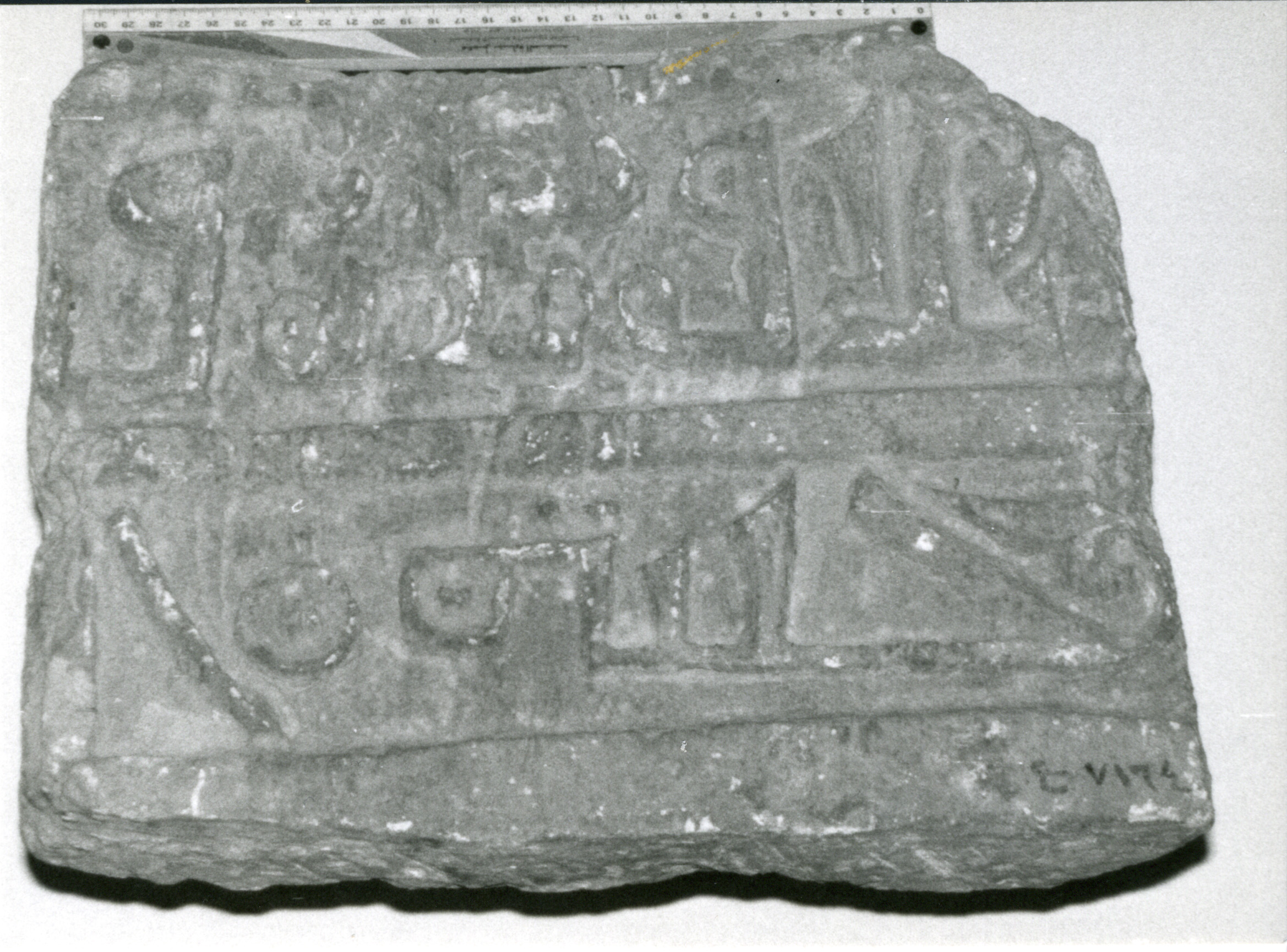
FB.01.01 HARRAK

The Iraq Museum , Baghdad

Baghdad › Baghdad
FB.01.01 View full size
FB.01.01 image 1 FB.01.01 image 2
ܠܢܝܗ̈ܘܢtheir (uncertain)

Hover a word for its meaning. Glosses draw on Amir Harrak’s translations and the SEDRA 3 Syriac lexicon (Beth Mardutho), used for academic purposes.

Whatever the reading of this word, it is definitely Syriac. The pronominal suffix 3 m. p. and the siāmē leave no doubt that it is so. FC. Ctesiphon Ctesiphon, modern Salmān Pāk, was the capital of the Parthians and then the Sassanians in Mesopotamia and its remains can still be seen on the east bank of the Tigris south of Baghdad (see the map in section F). Slightly to the south of Ctesiphon, Kōkē was located and this was the ancient patriarchal seat of the once famous Church of the East. Several excavations were conducted in Kōkē, unearthing namely two superimposed churches, along with their ornamental stuccos, including crosses and the figure of a holy man; Cassis 2002, p. 62-78. Below the floor of the sanctuary of the upper church a small ostracon was found inscribed in Syriac, and this is the only written text known from this most important site; the photograph of the inscription is published Courtesy of the Staatliche Museen zu Berlin - Museum für Islamische Kunst.
Date Probably the Abbasid period
Language Syriac
Script East Syriac
Location Detail The Islamic Gallery, but originally from “Dayr al-Za‛farān near Zākō,” as the caption says. The “Saffron Monastery” is the one located to the east of Mardin in modern Turkey, not far away from Zākō. Museum No.: IM 7164.
Dimensions 0.42m x 0.30m
Monasteries Dayr al-Za‛farān (Saffron Monastery) near Zākō
Periods / Eras Probably the Abbasid period
Harrak 2010, p.641-642
Support the Archive

Help Preserve
Endangered Inscriptions

Many of the sites documented in this archive have since been damaged or destroyed. Your support enables ongoing fieldwork, digitization, and scholarly publication.

Full image