Notes
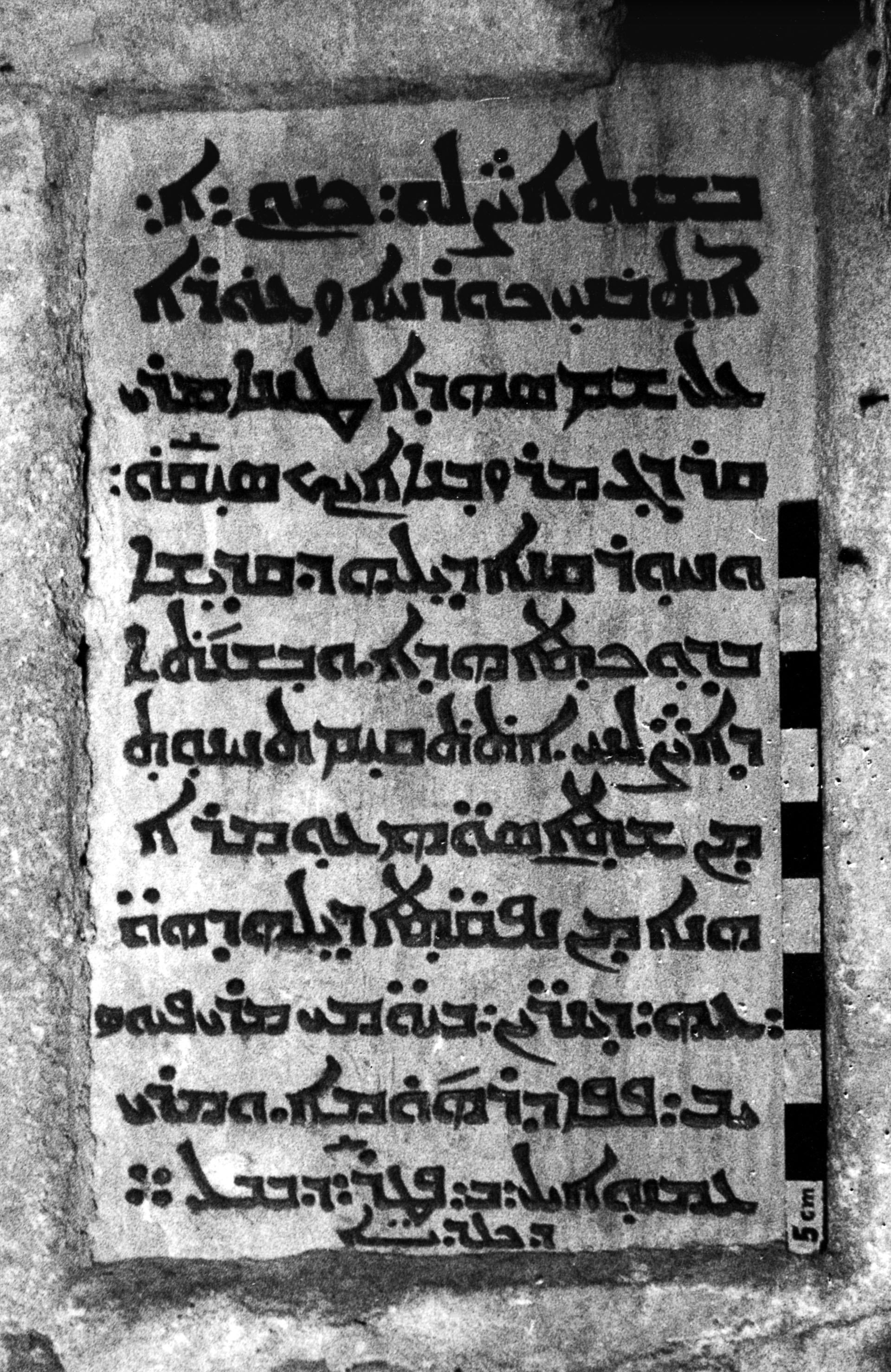
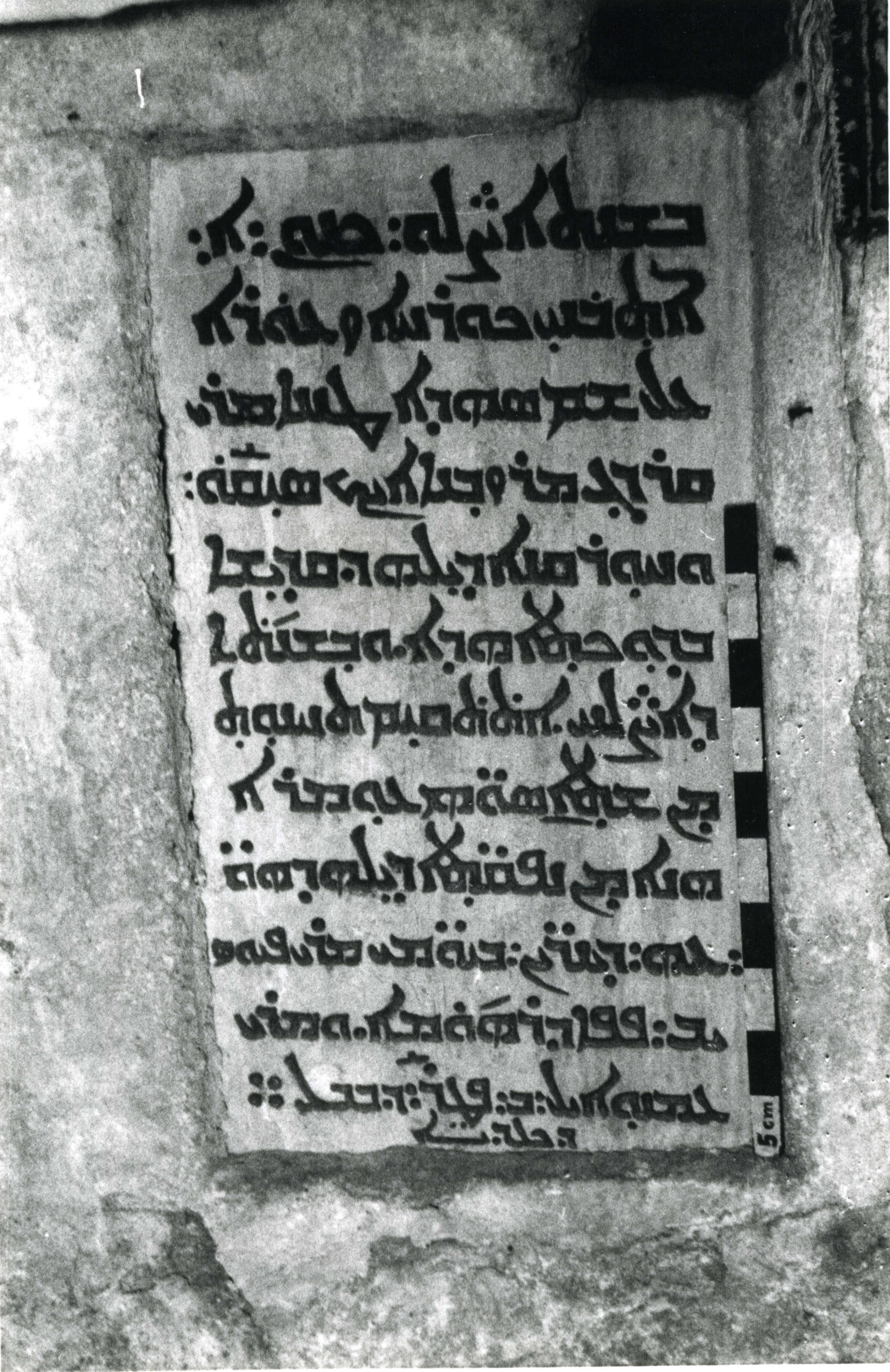
Line 4: The title of the holy man is Middle Persian and refers to the position of border inspector. Line 7: The year must be 1940, not only because the previous inscription dates the new building to this year, but also because Pius XII (1939-1958) was reigning then. Lines 10-12: Pope Pius XII (1939-1958) and Patriarch Yawsep ‛Ammānū’ēl II (1900-1947); see the latter’s epitaph in AA.05.05.
About the Place
Governorate
Governorate of Nineveh
This modern administrative district, named after the famous Assyrian capital Nineveh, covers Mosul, the medieval and modern counterpart of ancient Nineveh; the Assyrian triangle formed by the Tigris and the Lower Zāb to the east; and the region of Sinjār as far as the Iraqi-Syrian border to the west. The first Christian community lived near the ruins of ancient Nineveh on the east side of the Tigris, where Syriac sources place a “diocese of Nineveh”. By the 6th century the diocese had expanded to the west side of the Tigris, before the city of Mosul was founded, probably with the arrival of the Arabs in the early 7th century. Between the Tigris and the Lower Zāb several Christian communities, often very large and well organised, have lived from the earliest centuries of our era to this day. Most are located near archaeological mounds of distant antiquity, underlining the indigenous nature of the local inhabitants. Barṭellī (AB), Qaraqōš or Bēt-Kudēdā (AD), Karamlēs (AC), Alqōš (AO) and others are modern towns, but their names frequently occur in ancient manuscripts and inscriptions. Major monasteries were also built here, some of which, such as the Monastery of Mār Behnam (AE.01, AE.02) and the Monastery of Mār Mattā (AF), still stand and function today.
In the Abbasid period Mosul belonged to the province of Jazīra, “the Island”, so called because it was surrounded by the Tigris and the Euphrates. It was heavily populated by Syriac-speaking Christians, about whom we know a little from Syriac chronicles and other sources. In the 13th century Mosul enjoyed a golden age under Atabeg rule. Christian buildings of that period, such as the Monastery of Mār Behnam (AE.01 and AE.02), reflect the outstanding skill of the local people in art, mainly sculpture, and in architecture. In the 14th century the Christian communities of Mosul grew. As a result of the fall of Baghdad to the Mongol warrior Tamerlane, Christianity retreated from its birthplace in Babylonia, from the Mesopotamian centre (Takrit) and from the rest of the region to the outskirts of Mosul. Finding the mountainous north more secure than the southern plain, the refugees joined the well-established Christian communities already there.
In the Ottoman era, which began in 1516, the local Christians lived unmolested until the armies of the Persian Nādir Shah Tahmasp invaded the region in 1743. In this fertile and densely populated land, centuries-old churches were destroyed along with their furniture and manuscripts. The ruling Sultan Mehmud I rewarded the populations that had resisted the invader by allowing the Christians to rebuild their churches. As the commemorative inscriptions show, the Syriac term ḥaddet “renovate” often means “build anew”. Since Christians in Islamic lands were legally prohibited from building new churches, the word “rebuild” masked a different reality: some churches were so damaged that they had to be torn down completely and built afresh. The invasion of Tahmasp proved truly destructive. Most of the Syriac inscriptions in Mosul and its suburbs date from shortly afterwards, sometimes just one year later. Slabs bearing older inscriptions were reused in building and rebuilding, and some were ground into lime for mortar. In 1815 an epidemic struck the region of Mosul, killing thousands of people and opening a new chapter in the region’s history.
Syriac inscriptions abound in the governorate of Nineveh and make up the bulk of the present corpus. They are found in churches, monasteries and cemeteries, and above the doors of private houses. Several, especially after the invasion of 1743, are in Garshuni (Arabic written in Syriac script); Arabic written in this way is colloquial and heavily influenced by Syriac. Inscriptions in Arabic script appear in the late 19th century, though they are relatively few; we include those important for a better understanding of the Syriac inscriptions found with them. We begin with the city of Mosul, rich in churches, and move on to the other Christian settlements in its vicinity.
Locality
Alqōš
This important Chaldean town, with some 6000 inhabitants in the mid 1960’s, lies 45 km north of Mosul (AA), at the end of the road linking it with the three Chaldean villages discussed above (AL, AM, AN). Tradition makes it the town of the biblical Prophet Nahum, whose bones, according to inscriptions, rest there (AO.01.02). A local holy man, Mīkā of Nūhadrā, is especially revered: a church (AO.01.02) and a school (AO.01.09) are dedicated to him, and his name is particularly popular among the Alqōšites. Nearby are the famous monastery of Rabban Hurmizd on the mountain of Alqōš (AP.01) and that of Our Lady of Seeds on the plain (AP.02). The exact date of the Christianization of Alqōš is not known, but its name is linked with the 7th century Rabban Hurmizd, founder of the monastery named after him, which was the see of the patriarchate of the Church of the East between the 16th and the 19th centuries. The first leader of the uniate church, Sūlāqā (middle of the 16th century), also came from this monastery, and Alqōš gradually became Roman Catholic. The town suffered massacres, pillaging and pestilences, often mentioned in the colophons of manuscripts. In 1508 the army of the last Turkoman leader, Murād son of Ya‛qūb, attacked the people who had taken refuge in the monastery of Rabban Hurmizd, taking some of them captive. In 1740 Bahrām Pasha of ‛Imādiyya devastated the region, and shortly afterwards the army of Nādir Shah the Persian attacked the people of Alqōš, massacring some and taking others captive. In 1833 the people endured all kinds of torture at the hands of Muḥammad Pasha of Rawandūz, and the inscriptions of Rabban Hurmizd bear witness to those difficult days. On these and other atrocities suffered by Alqōš and the surrounding Christian villages see Harrak 20061, p. 298-302. Alqōš produced generations of outstanding scribes, to whom we owe countless manuscripts now in libraries around the world; Wilmshurst 2000, p. 241-258. Several poets and writers are also natives of this industrious town, where writing on paper and on stone never ceased; Fiey 1965-1968, vol. II, p. 387ff.
As expected, Syriac inscriptions are found in churches and shrines, but a few also decorate private houses, a rare practice, though more houses probably bore inscriptions in antiquity. Two cemeteries have yielded several funerary inscriptions, shown below. I am very grateful to Fathers Arkān, Emil, Mufīd Tōmās and Addai Ibrāhīm of Alqōš for their hospitality and help in photographing the inscriptions.
Site
The Chaldean Church of Mār Qardaġ
Mār Qardaġ is a 4th century martyr, a native of northern Mesopotamia, who died at the hands of the Sassanian king Šapur II. He became a popular Saint, to whom several churches and shrines were probably dedicated. Nothing survives of the earlier church buildings devoted to him, and his only important shrine is in a recent building on the south side of Alqōš. It was built in 1940, and its inscriptions are contemporary with the building.
Personal Names
Mār Qardaġ
Mār Pius XII
‛Ammānū’ēl II