About the Place
Governorate
Governorate of Dehōk
This governorate lies in Iraqi Kurdistan, in the far north of Iraq, squeezed between the governorates of Nineveh and Erbil. In late antiquity it was part of the province of Margā “the Meadow,” home of the famous monastery of Bēt-‛Ābē, known through the monastic history of the 9th century Thomas bishop of Margā; Budge 1902/1976. The province still has a few Christian villages, notably Fēškābūr (BB), Bersevē (BD), Kōmānē (BF), etc., but even these have been nearly emptied of their Aramaic-speaking inhabitants by continuing political unrest. The region suffered greatly in 1988 during the infamous Anfāl campaign, which destroyed a score of Christian villages, some of them ancient. Nothing was spared from dynamite: houses, mosques, mausolea and churches (including their inscriptions). If one hundred churches were dynamited (their real number is much higher), at least two hundred inscriptions would also have been destroyed, since any small village has at least two commemorative inscriptions (not counting some funerary ones). The few inscriptions published here therefore do not reflect the dense Christian presence in this region, now tragically reduced to heaps of ruins. Standing before some of the ruined churches, one feels powerless to rescue inscriptions that could shed some light on Christian history in this remote region.
Locality
Māngēš
Māngēš or Māngēšā, a picturesque Christian village that still speaks Aramaic, lies some 40 km north of Dehōk. The town once belonged to the district of ‛Imādiyya but was later added to that of Dehōk. The site is ancient, as the nearby archaeological tells have yielded prehistoric remains. Christianity too must have been rooted there since the early centuries of our era, but because the north of Iraq has historically been the scene of wars and invasions, nothing of ancient Christianity has survived. Today only one church offers Syriac inscriptions, and these are rather late.
Site
The Chaldean Church of Mār Gīwargīs
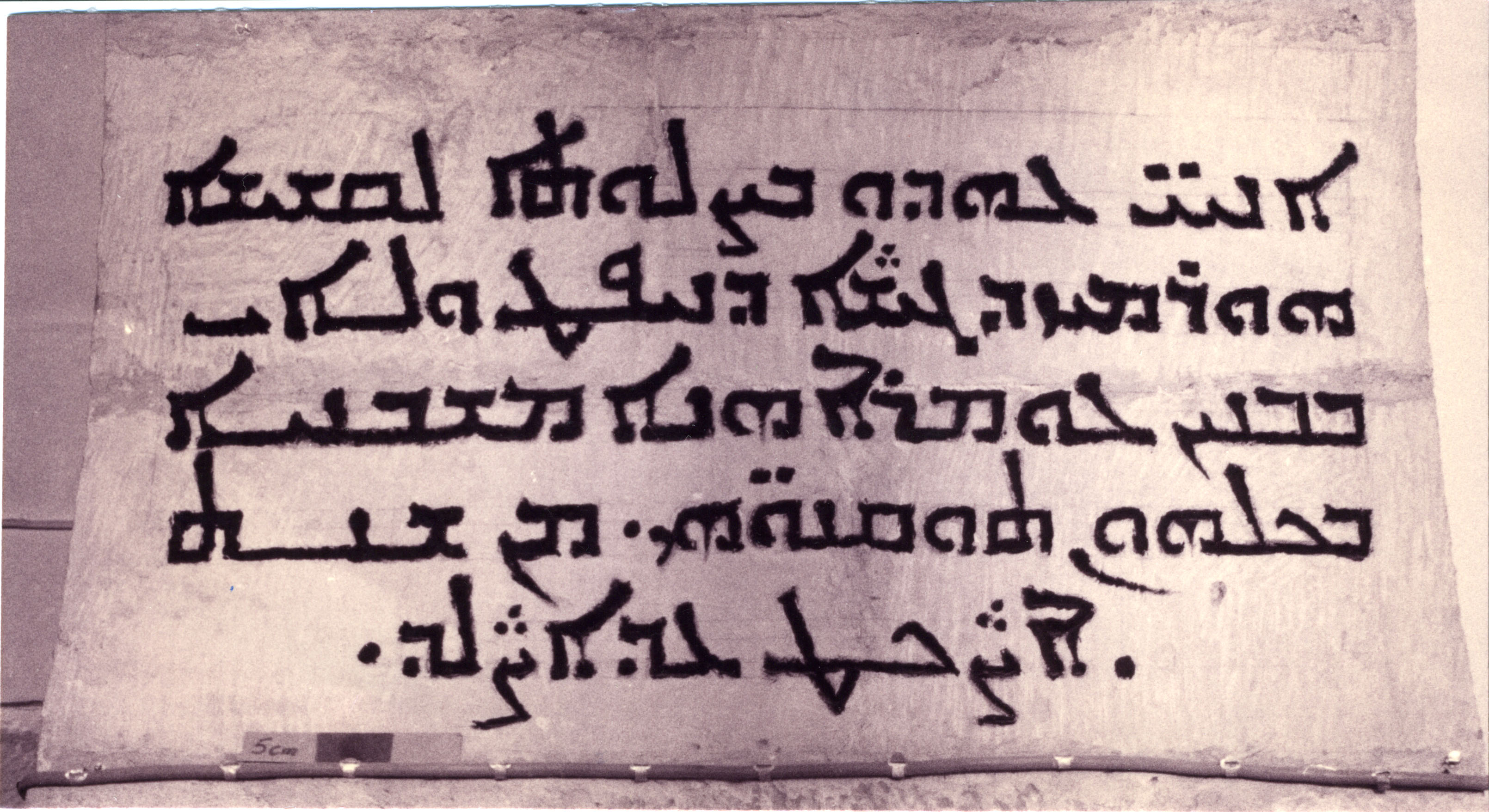
This beautiful church was built in the 1930s, probably over several layers of ancient churches. A few inscriptions commemorate the latest building, revealing the cultic influence of the Roman Catholic Church on this Chaldean village. Previously dedicated entirely to the popular Saint George, the church was rebuilt in 1934, at Rome’s expense, as the church of “Our Lady of the Rosary” (BI.01.01). St George was left with a mere altar inside (BI.01.02). Another altar is dedicated to “Abraham, the Father of Humanity”.