Notes
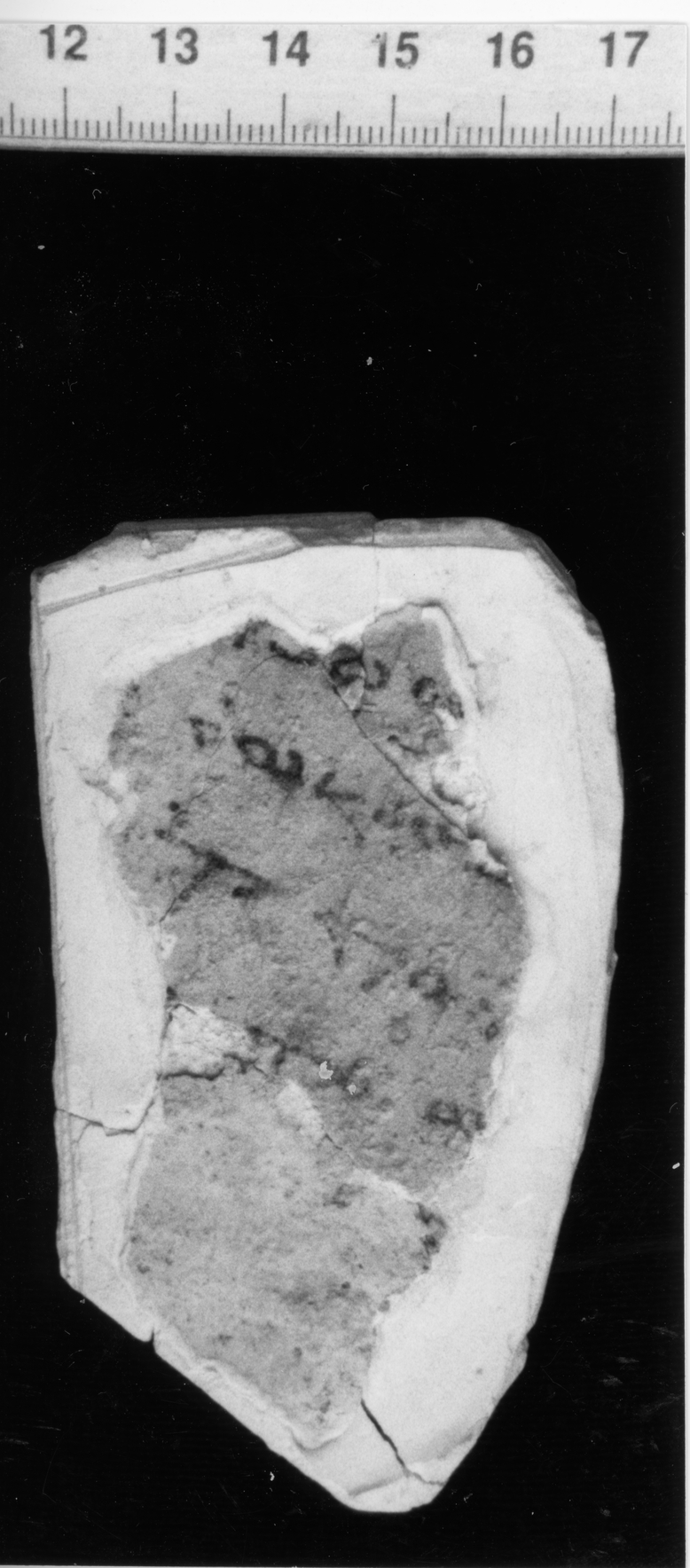
This stone strongly suggests that its find-spot was the headquarters of the Metropolitan of Takrit.
About the Place
Governorate
Governorate of Baghdad
The Governorate of Baghdad extends from Bējī and Takrit (FA) in the north to al-Iskandariyya (Alexander’s City), including Salmān Pāk (ancient Ctesiphon; FC), in the south, and covers the capital Baghdad and its surroundings on both banks of the Tigris. These were its boundaries before 1976, when it was divided into two governorates: Baghdad, with this city as its capital, and Ṣalāḥ-ad-dīn, with Takrit as its capital. In this Corpus we have kept the old administrative division, following our guide, the Iraqi Atlaṣ al-mawāqi‛ al-atariyya fī al-‛Irāq, published by the Iraqi Directorate of Antiquities in 1976, just when the two governorates were created. Inscriptions are found in the region of Takrit, in Salmān Pāk and in the Iraqi Museum (FB). Though most are housed in the Museum, they are classified below by the sites where they were excavated.
Locality
The City of Takrit
This modern city lies on the west bank of the Tigris, almost midway between Mosul (AA) and Baghdad. Its name appears almost unchanged in Neo-Assyrian sources as Tak-ri-i-ta-in, in Syriac sources as Tagrīt (see the inscriptions below), and in medieval Arabic sources as Takrīt, popularly Tikrīt. From the mid 6th century AD, through the Sassanian and Abbasid periods, the city was the see of the highest West Syriac authority in Mesopotamia, whose leaders bore titles such as Catholicos, Bishop (FA.01.10), Metropolitan (FA.01.01; FA.01.04; FA.01.12) and, later, mafriōnō, lit. “fruitful, generative” (FA.01.18). A series of West Syriac Metropolitans residing in Takrit between the mid-6th and the mid-12th centuries is known. The city was almost totally destroyed by the Mongols in 1394, after which Christianity disappeared from it forever. Two main sites in the region are full of Syriac inscriptions: the citadel of Takrit (FA.01) and the site of al-Chenisa (FA.02). I am grateful to the Department of Antiquities of the Republic of Iraq, particularly to the late Rabī‛ al-Qaysī, former Director of the Iraq Museum, for the authorization and facilities to photograph and study the Syriac inscriptions from Takrit in the summers of 1997 and the following year.
Site
The Citadel of Takrit
Takrit and its region are rich in archaeological sites with Neo-Assyrian, Syriac and Islamic remains, among them its impressive Citadel, a rocky height 30m above the water level of the Tigris, which runs past its east side. The Assyrian remains excavated there, including inscriptions, show that the stronghold is very ancient. Adad-narari I (1308-1275) left his name there, and the other cuneiform inscriptions from the citadel date to the first millennium BC. The Christian presence dates to the 6th century, if not much earlier, when the citadel became the headquarters of the West Syriac leaders in the mostly East Syriac domain of Mesopotamia. In the 1990s Iraqi archaeologists excavated the citadel, unearthing a church that was most probably the Church of the Martyrs Sergius and Bacchus. Immediately below the modern houses they uncovered a Christian level, including this church, a building complex to its west and an adjacent mosque, all of the pre- and post-Islamic periods. The church not only preserved an ancient architectural plan but also yielded a number of very interesting Syriac inscriptions. Other inscriptions came from the mosque, once part of the extensive church, from outside the citadel, and from a cemetery near the medieval city wall. For more details about the excavations and the inscriptions see Harrak 2001, p. 11-40.
References
Harrak 2010, p.609; Harrak 2001, p. 22 and fig. 18

 View full size